All Product
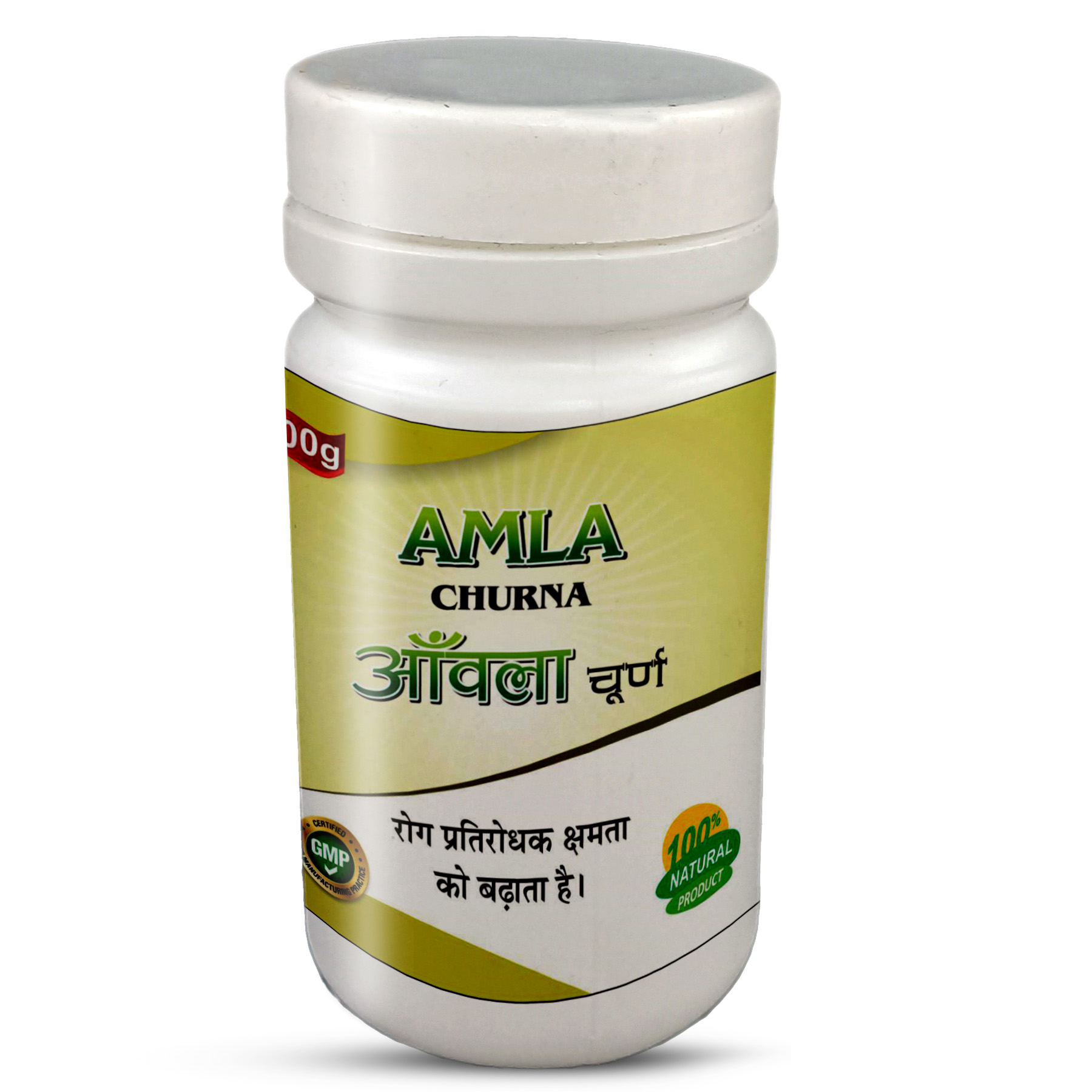
Amla Churna
Amla (Emblica officinalis) as per Bhav Prakash Nighantu
Sanskrit Name: Amalaki (आमलकी)
Botanical Name: Emblica officinalis / Phyllanthus emblica
Family: Phyllanthaceae
Bhav Prakash Nighantu describes Amla (Amalaki) as one of the most revered herbs in Ayurveda, belonging to the Vayasthapana Varga (anti-aging group). It is considered a divine fruit with unparalleled health benefits for promoting longevity, boosting immunity, and balancing all three doshas. Amla is recognized as a potent rejuvenator and a key component of the well-known Ayurvedic formulation Triphala.
Guna (Properties):
Rasa (Taste): Pancharasa (All tastes except Lavana — predominantly Amla or Sour)
Guna (Qualities): Laghu (Light), Ruksha (Dry)
Virya (Potency): Shita (Cooling)
Vipaka (Post-digestive effect): Madhura (Sweet)
Dosha Effects:
Tridoshahara (Balances Vata, Pitta, and Kapha doshas)
Therapeutic Indications:
Rasayana (Rejuvenative): Promotes longevity, vitality, and overall health.
Balya (Strength Enhancer): Improves physical strength and immunity.
Chakshushya (Eye Health): Enhances vision and prevents eye disorders.
Agnideepana (Digestive Tonic): Stimulates digestive fire and aids in proper digestion.
Shothahara (Anti-inflammatory): Reduces inflammation and swelling.
Raktaprasadana (Blood Purifier): Helps detoxify blood and improve skin complexion.
Jwarahara (Antipyretic): Useful in reducing fever and related symptoms.
Vranaropana (Wound Healing): Promotes healing of wounds and ulcers.
Pittashamak: Effectively pacifies aggravated Pitta-related conditions like acidity and burning sensations.
Modern Ayurvedic Usage:
Amla is a rich source of Vitamin C and powerful antioxidants, making it a key ingredient in health supplements, hair care products, and skincare formulations. It supports immunity, enhances digestion, promotes hair growth, and slows down aging naturally.
Sanskrit Name: Amalaki (आमलकी)
Botanical Name: Emblica officinalis / Phyllanthus emblica
Family: Phyllanthaceae
Bhav Prakash Nighantu describes Amla (Amalaki) as one of the most revered herbs in Ayurveda, belonging to the Vayasthapana Varga (anti-aging group). It is considered a divine fruit with unparalleled health benefits for promoting longevity, boosting immunity, and balancing all three doshas. Amla is recognized as a potent rejuvenator and a key component of the well-known Ayurvedic formulation Triphala.
Guna (Properties):
Rasa (Taste): Pancharasa (All tastes except Lavana — predominantly Amla or Sour)
Guna (Qualities): Laghu (Light), Ruksha (Dry)
Virya (Potency): Shita (Cooling)
Vipaka (Post-digestive effect): Madhura (Sweet)
Dosha Effects:
Tridoshahara (Balances Vata, Pitta, and Kapha doshas)
Therapeutic Indications:
Rasayana (Rejuvenative): Promotes longevity, vitality, and overall health.
Balya (Strength Enhancer): Improves physical strength and immunity.
Chakshushya (Eye Health): Enhances vision and prevents eye disorders.
Agnideepana (Digestive Tonic): Stimulates digestive fire and aids in proper digestion.
Shothahara (Anti-inflammatory): Reduces inflammation and swelling.
Raktaprasadana (Blood Purifier): Helps detoxify blood and improve skin complexion.
Jwarahara (Antipyretic): Useful in reducing fever and related symptoms.
Vranaropana (Wound Healing): Promotes healing of wounds and ulcers.
Pittashamak: Effectively pacifies aggravated Pitta-related conditions like acidity and burning sensations.
Modern Ayurvedic Usage:
Amla is a rich source of Vitamin C and powerful antioxidants, making it a key ingredient in health supplements, hair care products, and skincare formulations. It supports immunity, enhances digestion, promotes hair growth, and slows down aging naturally.
You May Also Like